

There is a moment in every great film where the clothes stop being costumes and start being desired. You're not looking at a character anymore. You're looking at a life you want to step into. The feeling that follows this particular hunger is one of the most powerful forces in fashion.
What's changed is where that hunger goes next. Cinema acts as a time machine. When Gen Z watches films or period pieces capturing the late 90s or early 2000s, it triggers an instant desire for authenticity. Its biggest hidden impact isn't the box office numbers; it's the quiet rebellion happening in our wardrobes, creating preloved shopping a cinematic self-expression. Cinema didn't mean to, but it built the ultimate marketing machine for circular fashion.
“Films don't sell products. They sell desire and the most desired things on screen right now already have a past.”
FILMS & THEIR DEMAND SURGES
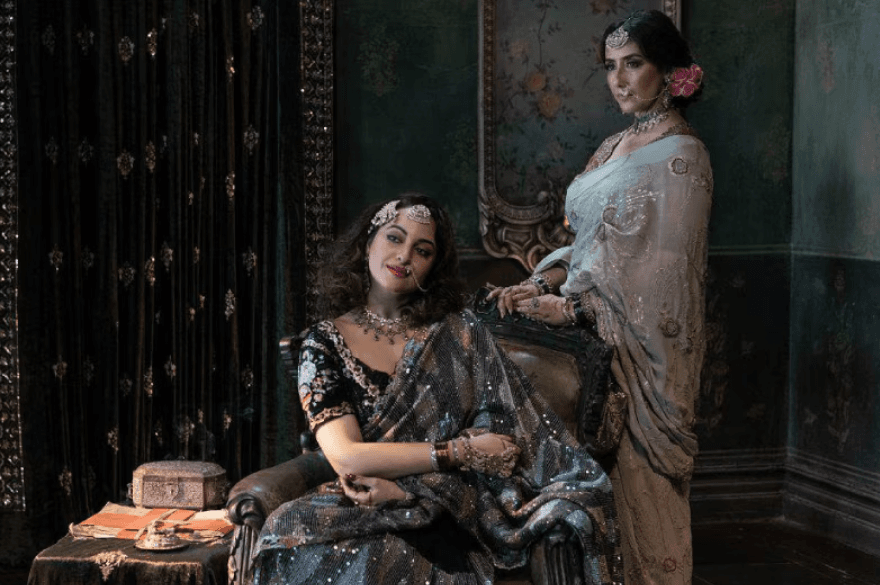
Heera Mandi: The Diamond Bazaar (Netflix, 2024)
Costume designers Rimple and Harpreet Narula have taken two years in designing more than 300 costumes for Sanjay Leela Bhansali's drama series by traveling all over the globe to look out for vintage material from northern India that existed before the country got partitioned. Vocabulary like Lucknowi ghararas, Farshi silhouettes, Jamawar shawls, phulkari weaves doesn't exist in the current world retail fashion language.
Rocky Aur Rani Ki Prem Kahaani (2023) and the 90s Nostalgia Effect
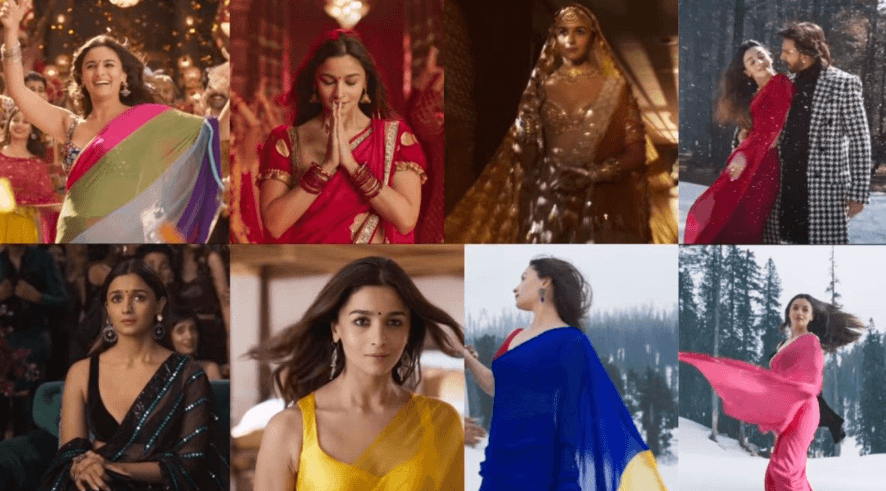
Manish Malhotra dressed Alia Bhatt’s character Rani in nearly 20 chiffon saree variations, reviving a very specific register of dressing rooted in the Bollywood of the 1990s, the era Malhotra himself helped define. Long before Rocky Aur Rani, it was Malhotra who put the chiffon saree back at the centre of Indian aspiration: Karishma Kapoor in Chandni (1989) and Dil To Pagal Hai (1997), the iconic drapes of Hum Aapke Hain Koun (1994), the georgette pallu of Main Pyar Kiya (1989), and the maximalist saree moments of Kabhi Khushi Kabhie Gham (2001) each created a visual vocabulary that a generation grew up with.
Rocky Aur Rani movie revived the feeling of that era leading to demand crashing the designer’s website within hours. Sarees priced between Rs. 48,000 and Rs. 58,000 sold out entirely and the budget shoppers turned immediately to preloved platforms searching for the same drapes.
Ponniyin Selvan I & II (2022–2023)
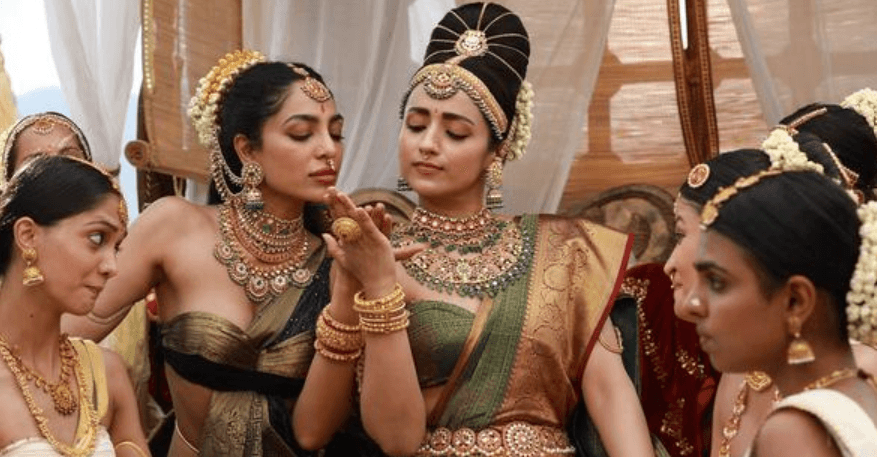
Mani Ratnam’s Chola epic sent audiences across South India searching for Madisaar drapes and embroidered nine-yard silks in burgundy, emerald, and sapphire. Textile store owners reported directly attributable surges in silk saree sales within weeks of the October 2022 release. The pieces audiences truly wanted, rooted in 10th-century craft traditions, exist today almost exclusively in preloved and collector contexts.
WHEN DESIGNERS BECAME THE BRIDGE
What sets off the desire in the first place is these films. What elevates that desire into a revolution, on the other hand, is the revelation of how that was made by the designers, who have been quietly turning away from fast retail for a reason: it lacks soul on camera. Clothes that have been worn carry visual texture, subtle fading, and a lived-in quality that no new garment can replicate synthetically.
Rimple and Harpreet Narula, two designers who talked extensively about how they used their sources from archives, researched photographs from 1940s books, and preserved textiles that were too delicate to be recreated again. Poornamrita Singh, who designed both seasons of Made in Heaven, spoke freely about her love for vintage and all things old world as the guiding principle for wardrobe design.
Once designers of such caliber state that the starting point of their design process comes from the archive and not the factory, preloved stops becoming a compromise but the only way forward.
“I am an old soul. I naturally gravitate towards using heritage textiles and crafts, but I’m personally a modernist. Buy less but buy better. Where longevity is seasonless and is passed from one generation to the next.”
- Sabyasachi Mukherjee, Costume Designer, THE GEOSTRATA 2022
THE OUTFIT ID ECONOMY
Parallel to the films themselves, a new behaviour has emerged on social media that is quietly reshaping how people discover fashion. Accounts dedicated entirely to identifying what characters wear on screen 'outfit ID' communities have built audiences in the millions because they want to inhabit the feeling the film produced and the garment is the closest material object to that feeling. The premise is simple: screenshot a frame, identify the garment, find where to get it.
Fast fashion makes everyone look uniform. Preloved fashion, especially when glamorised by a great film, allows the consumer to step into a curated identity. This is what cultural observers have begun calling Main Character Energy and the answer to their most compelling pieces always points in one direction: check curated preloved platforms.
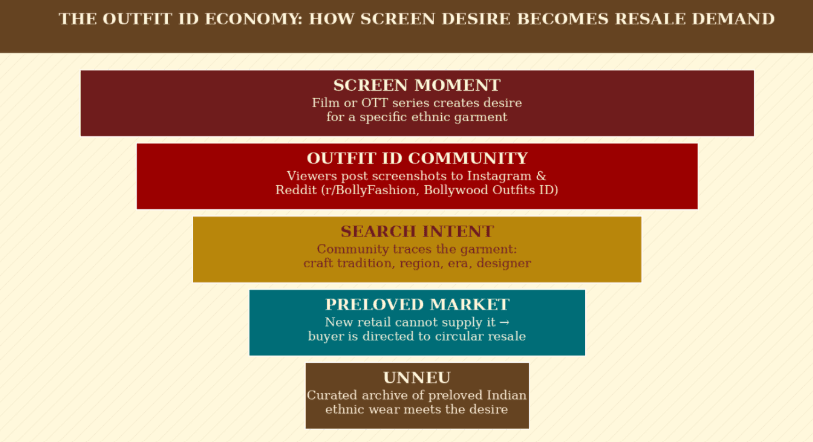
These communities are driving preloved discovery more effectively than most paid campaigns. They create intent at the moment of highest aspiration right after a viewer has fallen in love with what they've seen on screen and they direct that intent toward the circular economy. They are advocates for the specific piece but the effect is the same.
And the screen driving this behaviour isn't always a cinema one. The biggest wardrobe conversations of our time are happening on streaming platforms too.
OTT AND THE AESTHETICISATION OF EVERYDAY DRESSING
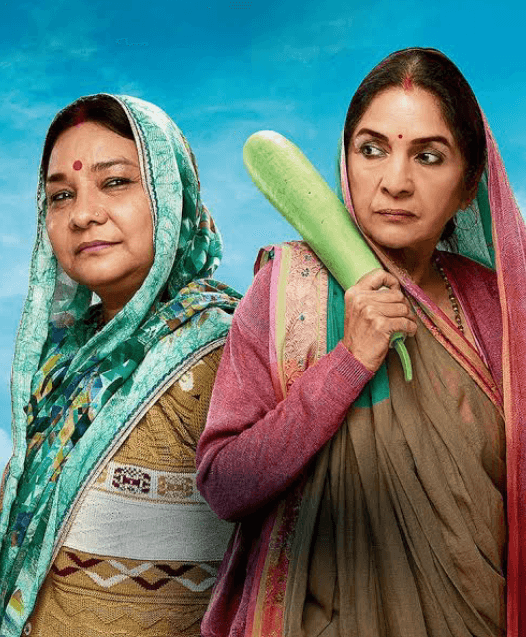
Streaming extended the cinema effect into the everyday. Made in Heaven fuelled demand for heritage bridal wear, one-of-a-kind silhouettes impossible to source in new retail. Bridgerton sent viewers searching for period European pieces; Panchayat brought the handloom cotton saree back into daily conversation. In each case, desire migrated not toward new merchandise but toward preloved.
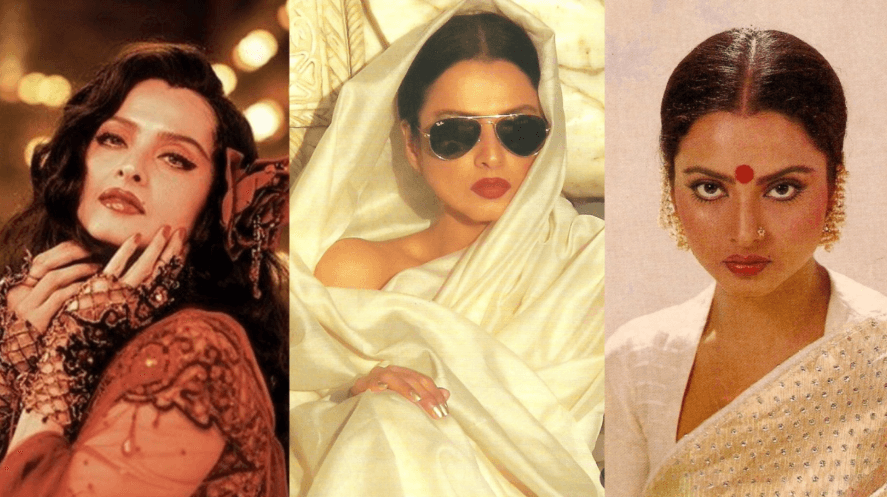
The retro saree culture running through OTT today has a longer lineage. Rekha established the definitive saree archetype through the 1980s and 1990s: the heavily embroidered Banarasi silk, the deep jewel tones, the contrast border, the pulled-back chignon. The ‘Rekha saree’ remains among the most searched aesthetic references on preloved platforms because it cannot be recreated: it requires the right weave, the right hand, and the right age of fabric. It has to be found, not made.
Which raises the question that has always been at the centre of this story: when screen creates desire that retail cannot satisfy, where does a person actually go?
WHERE THE DESIRE GOES: UNNEU
This is the gap UNNEU was built for. Every time Indian cinema creates desire for a craft tradition, a silhouette, or a weave that mass production cannot replicate: the Chola silk of Ponniyin Selvan, the pre-partition phulkari of Heeramandi or the vintage chiffon of Rocky Aur Rani there is nowhere for that desire to go in new retail. The price point does not exist. The craftsmanship is not being reproduced.
UNNEU is the answer to the question the film leaves hanging. A curated archive of preloved Indian sarees, sourced with the intelligence to understand what screen desire actually looks like and where to find the real thing.
The film creates the desire. UNNEU is where that desire finds a home.