

Sunita's grandmother didn't call it “preloved.” She didn't call it “sustainable” or “vintage” or “circular fashion.” She simply said Yeh tere liye hai meaning this is for you. And she pressed a Benarasi silk into her granddaughter's hands the morning before her wedding. The saree was forty years old. It smelled of sandalwood and moth balls. Its zari border had softened from blinding gold to a warm, burnished amber. And it was, without question, the most beautiful thing Sunita had ever worn.
India has always known what the rest of the world is now slowly learning: that a garment well-loved is a garment made richer. Yet somewhere between the rise of fast fashion malls and Instagram hauls, we forgot this. We started treating the saree, perhaps the world's oldest continuous fashion garment, as something to buy new, wear twice, and store forever. It's time to remember differently.
"Every saree that gets a second life is a small act of cultural preservation, economic wisdom, and environmental courage."
A Textile That Outlived Empires
The saree is not just fashionable. It is a biography of 5,000 years of it.
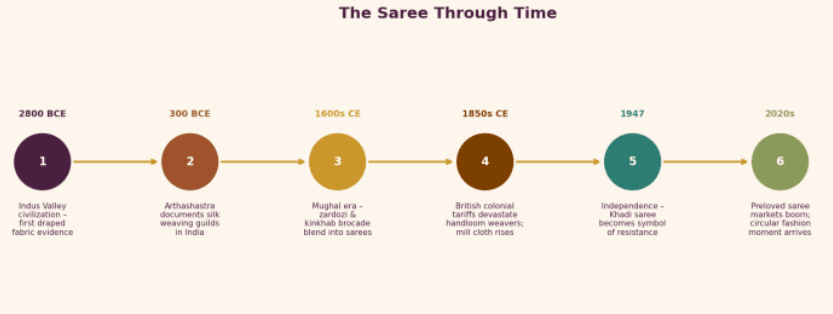
Archaeological evidence from the Indus Valley Civilisation (circa 2800 BCE) shows figurines draped in fabric strikingly similar to the saree. By 300 BCE, Kautilya's Arthashastra documented state-regulated silk weaving guilds producing cloth for royalty across the subcontinent. Each region developed its own textile grammar: the stiff grandeur of the Kanjivaram in the south, the airy lightness of Chanderi from Madhya Pradesh, the geometric poetry of Pochampally ikat from Telangana.
Then came the colonial era.
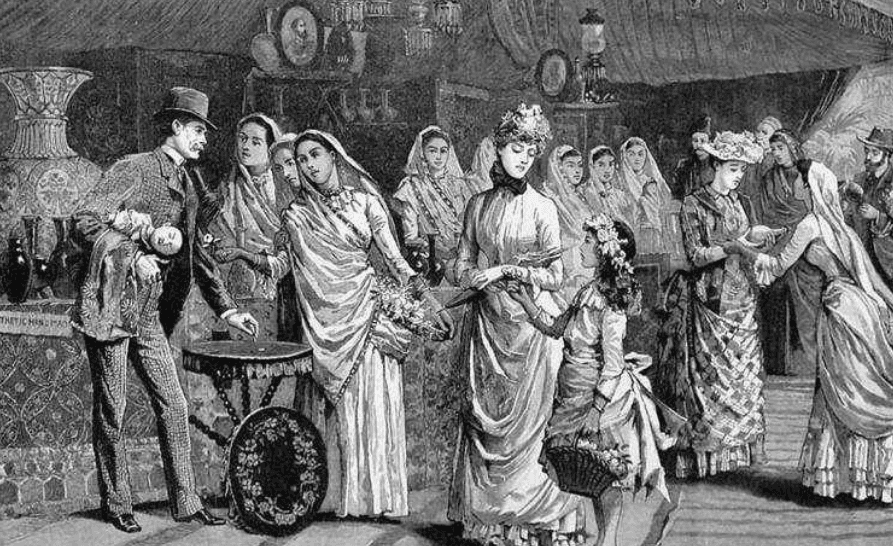
Between 1757 and 1947, British industrial policy systematically dismantled Indian handloom production. The infamous tariff structures of the East India Company flooded Indian markets with cheap mill cloth from Lancashire while taxing Indian woven exports into nonexistence. Weavers who had sustained community livelihoods for centuries were pushed into poverty.
The response? India's handloom saree became an act of political resistance. Mahatma Gandhi's khadi movement reframed the saree as a symbol of Swadeshi pride. When Indian women draped themselves in khadi, they were not just dressing; instead voting.
This history matters because it means every handloom saree in circulation carries the memory of a struggle. But the saree’s story does not stop at the loom or the archives. Every saree carries an environmental cost and that cost, in the age of climate reckoning, demands our attention.
The Planet is Running Out of Patience
India is the world's sixth-largest generator of textile waste. Each year, approximately 7 million tonnes of textile waste is discarded, much of its sarees, blouses, and dress materials thrown out in post-wedding or festive clearouts. The global fashion industry accounts for 10% of annual carbon emissions more than aviation and maritime shipping combined.
But what does this mean for a single saree? The numbers are striking:
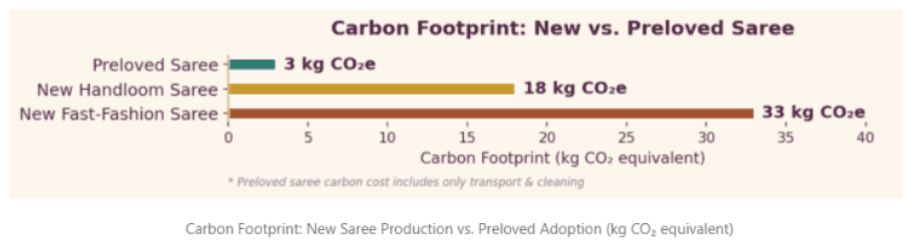
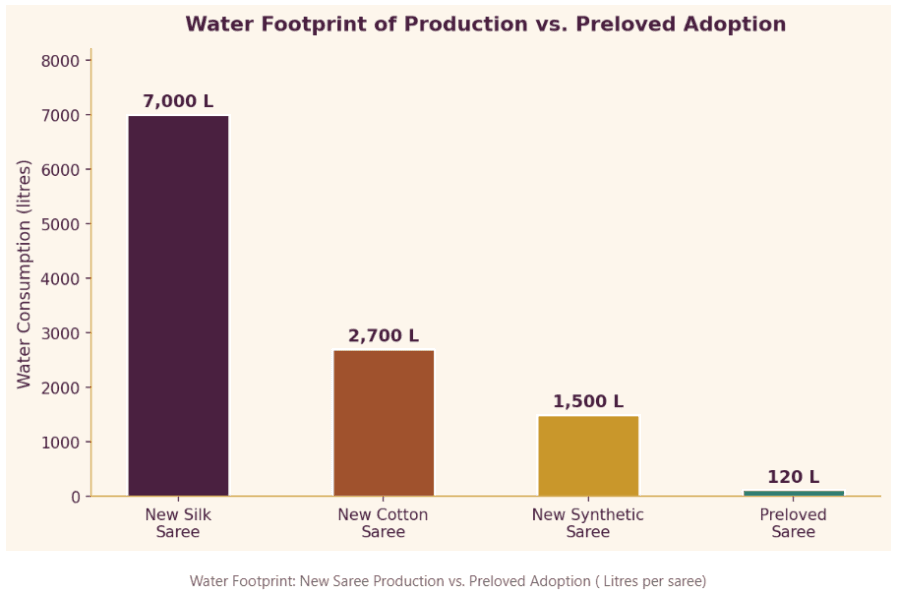
A preloved saree, by contrast, requires only transport, dry cleaning, and potentially minor repair; its manufacturing footprint has already been paid for by the original owner. Choosing pre-loved is not a compromise; it is the single highest-impact fashion decision an Indian consumer can make.
"Your grandmother never threw away a saree. The new sustainability movement is just rediscovering Indian household wisdom."
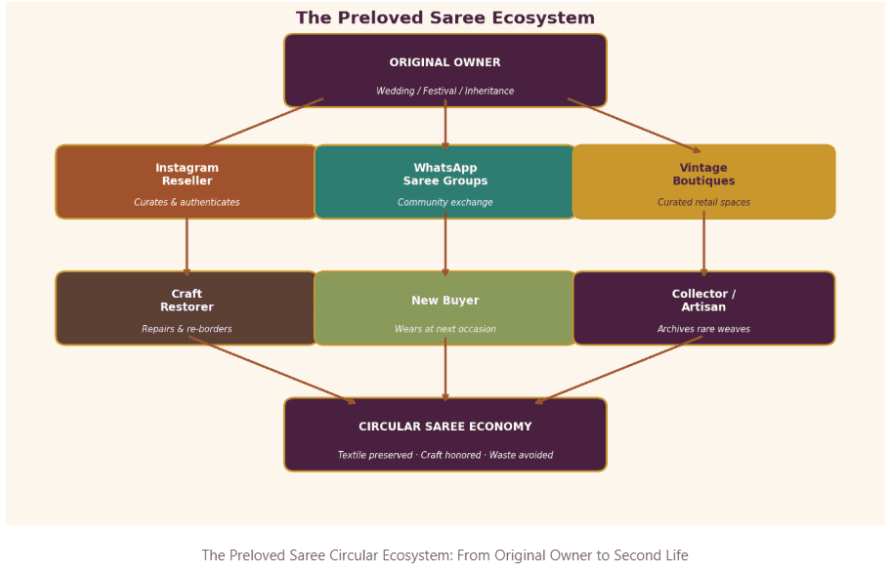
Statistics tell one part of the story. But to understand why the preloved saree economy is not just viable but vibrant, we need to meet the people who are quietly building it: one Instagram post, one handwritten card, one carefully folded Banarasi at a time.
The Saree Reseller Revolution: How Platforms like UNNEU Are Changing Textile Commerce
By 2025, Social media platforms like Facebook and Instagram hosted over 12,000 preloved saree accounts in India, yet buyers spent hours scrolling through vague condition descriptions, and unverified sellers. The market had supply and demand but no infrastructure. It was loud, cluttered, and hard to trust. UNNEU stepped in not with a louder presence but with a better process.
Consider the example of Meera, a Pune-based buyer who had twice been discontented by social media purchases, once receiving a saree with an undisclosed stain and once a weave misrepresented entirely. On Unneu, she found a 1990s Pochampally ikat, listed with its weaving region and approximate age. She bought it in under ten minutes. It arrived exactly as described.
That single experience is what UNNEU is systematically trying to replicate at scale. Every saree on the platform is authenticated, standardised, cleaned, and documented. Each verified listing quietly dismantles the stigma by replacing hesitation with evidence.
UNNEU did not create the preloved saree market, rather simply made it safe enough for everyone to enter in the pre-loved saree circular ecosystem.
Unstitching the Stigma
What makes UNNEU particularly significant is not just what it sells but what it normalises.
Every time a saree is listed with proper verification, it sends a clear signal: preloved is not a compromise, rather a considered choice made within a system designed to protect the buyer. She is not taking a leap of faith into an Instagram comment thread. She is making a transaction backed by standards that exist whether or not she knows the seller personally. This is how stigma actually breaks.
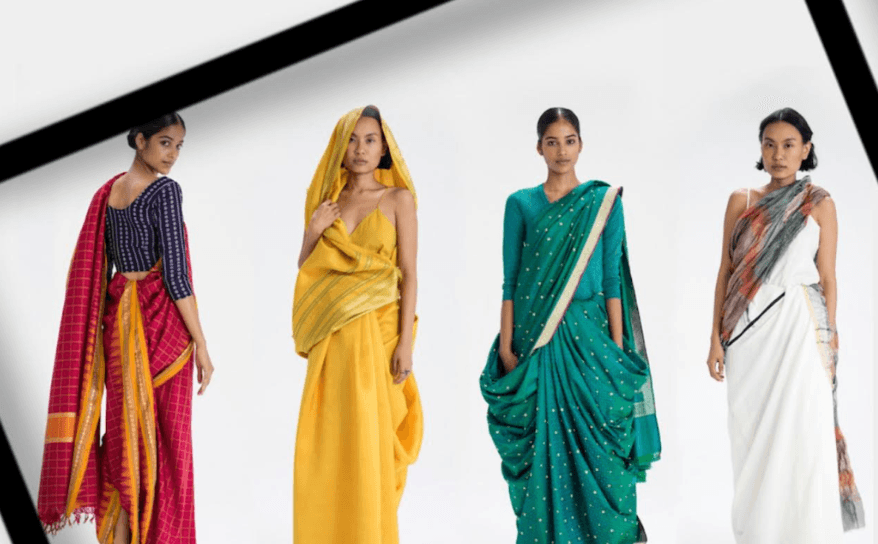
The contrast with the unorganised market is not subtle. But on UNNEU, the variables such as discovery, provenance and trust are replaced by a standard, and its effect is something the social media market can never manage.
Where Every Saree Finds Its Next Chapter
UNNEU is the answer to all the questions of trust, convenience and provenance. It is built for a woman selling it, who chose it carefully, wore it on an occasion that mattered, and cared for it well enough that someone else can love it next. It is not just a marketplace, but is a platform that understands what this act means.nbsp; Many of UNNEU’s sellers are homemakers whose knowledge of textiles is deep, built over decades of wearing and caring for sarees. It turns that expertise into income and that income into independence, making every seller a micro-entrepreneur, every listing an act of curation.
“A saree passed forward is not given away. It is trusted to the right hands.”
From the golden Muga silks of Assam to the mathematical Patolas of Patan. From the narrative Balucharis of Bengal to the bridal Banarasis of Varanasi. India’s saree traditions are not fading. They are finding new hands.
Sources: Global Fashion Agenda (2023), WWF Water Footprint Reports, NITI Aayog Textile Circularity Study (2022), Ellen MacArthur Foundation. Case study names are representative archetypes based on widely documented community patterns.